
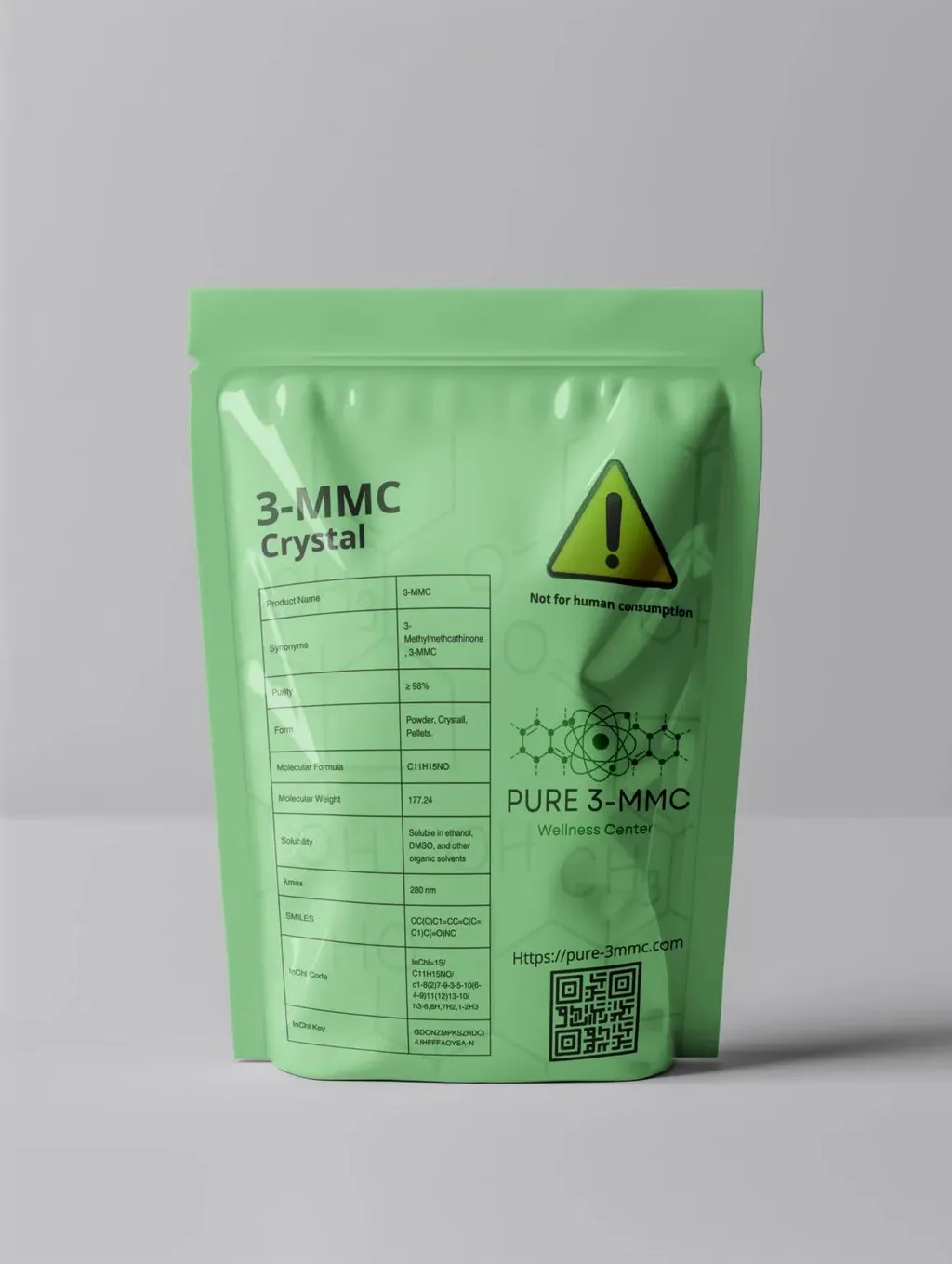
3-MMC is a synthetic cathinone that has become a subject of interest in toxicology, public health and research concerning novel psychoactive substances. Its chemical name is 3-methylmethcathinone, and it belongs to a wider group of stimulant compounds that can affect the central nervous system. Although discussions about 3-MMC often focus on its subjective effects, understanding the substance properly requires a broader examination of its pharmacology, potential health consequences, uncertainty surrounding unregulated products and changing legal controls.
Information about synthetic cathinones can be difficult to interpret because scientific evidence is not as extensive as it is for many established medicines. Some information comes from laboratory research, forensic toxicology, clinical reports and public-health investigations, while other information found online may come from personal experiences or commercial sources. These sources should not be treated as equivalent.
A careful approach to 3-mmc therefore focuses on what is known, what remains uncertain and why individual exposure can result in substantially different outcomes.
The Scientific Background of 3-MMC
3-MMC belongs to the synthetic cathinone family. Cathinone compounds are chemically related to cathinone, a naturally occurring stimulant associated with the khat plant. Synthetic versions can have substantially different chemical structures and pharmacological properties.
The number of synthetic cathinones that have appeared on recreational drug markets has increased over time. Some were initially associated with research or pharmaceutical chemistry, while others became known as novel psychoactive substances. Their availability and legal classification have changed repeatedly as authorities have gathered additional evidence about their risks.
3-MMC is generally described as a stimulant with additional effects that can influence mood and social behaviour. Its pharmacological activity is associated with neurotransmitter systems involved in reward, motivation, alertness and emotional regulation.
However, understanding the chemical family does not automatically establish the safety profile of an individual substance. Small structural differences between related compounds can influence potency, duration, metabolism and toxicity. For that reason, evidence about another cathinone should not automatically be applied to 3-MMC.
Research also needs to distinguish between controlled laboratory material and substances obtained from uncontrolled markets. The latter may contain unexpected chemicals or concentrations that make individual experiences difficult to interpret.
Pharmacological Effects on the Brain
The central nervous system is one of the primary areas affected by stimulant substances. 3-MMC has been associated with activity involving neurotransmitter systems such as dopamine, norepinephrine and serotonin.
Dopamine is involved in reward, motivation and reinforcement. Norepinephrine contributes to alertness and physiological arousal, while serotonin has important functions in mood, emotional regulation and social behaviour. Changes in these systems can help explain why synthetic cathinones may produce combinations of stimulation and mood alteration.
These same mechanisms can also contribute to unwanted effects. Increased physiological arousal may result in a faster heartbeat, elevated blood pressure, restlessness or difficulty sleeping. Changes involving serotonin and other neurotransmitters can also contribute to psychological symptoms in some circumstances.
The intensity of an individual's response can vary substantially. Factors such as body composition, existing health conditions, sleep deprivation, stress, previous exposure and other substances can affect the experience.
Another challenge is that laboratory measurements of pharmacological activity cannot always predict exactly how a substance will affect an individual. Human responses are influenced by many biological and environmental variables.
Consequently, scientific information about 3-MMC should be viewed as a description of potential effects rather than a guarantee of what a particular person will experience.
Short-Term Physical Effects and Toxicity
Stimulant exposure can affect several body systems simultaneously. Cardiovascular changes are particularly important because increased heart rate and blood pressure can place additional stress on the heart and circulatory system.
Possible physical effects associated with stimulant-type substances include sweating, tremors, nausea, dizziness, increased body temperature and difficulty sleeping. Some individuals may experience significant agitation or physical restlessness.
More serious toxicity can involve abnormal heart rhythms, severe hypertension, seizures, collapse or loss of consciousness. Extremely elevated body temperature is another potentially dangerous complication. Severe hyperthermia can interfere with normal cellular processes and damage organs if it is not treated promptly.
The risk of serious toxicity cannot be determined simply by looking at a product or by comparing one person's experience with another person's experience. Differences in composition, individual physiology and environmental conditions can all influence the outcome.
For example, prolonged physical activity and a warm environment can increase physiological stress during stimulant exposure. Dehydration and prolonged wakefulness may also worsen a person's condition.
These factors demonstrate why apparently simple descriptions of stimulant effects cannot capture the full medical risk.
Psychological Effects and Mental Health Concerns
The psychological effects associated with 3-MMC are another important area of concern. Stimulant-type substances may alter mood, attention, energy and perception, but responses can vary considerably.
Some reports concerning synthetic cathinones describe increased alertness or sociability. Other experiences can involve anxiety, irritability, panic, confusion or paranoia. Strong stimulation may make it difficult for an individual to remain calm, particularly when combined with environmental stress or sleep deprivation.
Prolonged wakefulness can further affect psychological functioning. Sleep deprivation can impair concentration, decision-making and emotional regulation and may contribute to perceptual disturbances.
Severe agitation or confusion should not automatically be regarded as a temporary recreational effect. When psychological symptoms become extreme, they may indicate significant toxicity and require professional assessment.
Repeated exposure can also create behavioural concerns. A person may begin using a substance more frequently in an attempt to reproduce previous effects or manage unpleasant after-effects. Although the dependence potential of individual synthetic cathinones continues to require further research, problematic stimulant use is a recognized public-health concern.
This makes it important to distinguish between short-term subjective effects and broader patterns of use.
Uncertainty About Composition and Drug Testing
One of the most significant challenges surrounding 3-MMC is uncertainty about the contents of products sold outside regulated pharmaceutical systems.
A substance may be advertised under a particular chemical name without independent evidence that the material actually contains that compound. It may contain another synthetic cathinone, a mixture of substances, contaminants or a different concentration from what is claimed.
This issue is important in toxicology because the identity of a substance can influence its clinical effects. Two samples with similar appearance can have substantially different chemical compositions.
Laboratory testing can identify substances in biological samples or seized materials, but an individual's visual inspection cannot establish chemical identity. Marketing descriptions are also not substitutes for validated analytical methods.
The uncertainty surrounding composition means that reports describing a particular effect should be interpreted carefully. If the material involved was not analytically confirmed, it may be impossible to know whether the reported reaction was caused by 3-MMC or another compound.
This is one reason researchers and public-health authorities emphasize laboratory evidence and toxicological analysis when investigating novel psychoactive substances.
Potential Drug Interactions
Interactions are another major concern when considering synthetic psychoactive substances. Combining different compounds can produce effects that are difficult to predict because several substances may influence the cardiovascular system, nervous system or body temperature at the same time.
Other stimulants may increase physiological arousal when combined with another stimulant. Substances affecting serotonin or other neurotransmitter systems can also create additional concerns.
Prescription medicines introduce another layer of complexity. A medication that is normally tolerated under medical supervision may behave differently when combined with an unregulated psychoactive substance.
Alcohol and recreational drugs can further complicate the clinical picture. When several substances are involved, it may become difficult to determine which compound contributed to a particular symptom.
For these reasons, medical professionals should be informed about possible substance exposure when someone requires treatment for suspected poisoning or severe adverse effects. Accurate information can help clinicians evaluate possible causes and choose appropriate supportive care.
Recognising Dangerous Symptoms
Awareness of severe symptoms is important because stimulant toxicity can sometimes develop rapidly. Serious warning signs may include intense chest pain, difficulty breathing, seizures, collapse, loss of consciousness, extreme overheating or severe confusion.
A person experiencing these symptoms should receive urgent medical attention. Emergency services can assess vital signs and provide appropriate treatment based on the individual's clinical condition.
Severe agitation can also be medically significant, particularly when accompanied by high body temperature, abnormal behaviour or cardiovascular symptoms. Attempting to manage serious toxicity without professional assistance can delay necessary treatment.
It is also important not to rely on online advice as a substitute for medical assessment. Internet sources can provide general educational information, but they cannot evaluate a person's vital signs, neurological condition or other clinical indicators.
When emergency treatment is required, healthcare professionals may ask what substances were involved, approximately when exposure occurred and whether other medicines or drugs were also taken. Providing accurate information can assist the medical team.
Legal Controls and Regulatory Changes
The legal status of 3-MMC depends on the country and can change over time. Authorities have introduced different forms of control over synthetic cathinones in response to evidence of misuse, poisoning and other public-health concerns.
Some countries regulate individual substances specifically, while others use broader legislation covering groups of psychoactive compounds. The distinction is important because a substance may be covered by legislation even when its specific chemical name is not immediately obvious in a general search.
Legal rules can also apply differently to possession, production, importation, supply and other activities. International travel can create additional complications because laws may differ significantly between neighbouring countries.
For accurate information, current government legislation and official regulatory sources should be consulted. Older articles and commercial webpages can become outdated when legal classifications change.
It is also important to separate legal status from health risk. A substance being legal or temporarily uncontrolled in one jurisdiction does not mean that it has been proven safe. Conversely, legal restrictions do not necessarily provide a complete scientific description of every possible effect.
Why Responsible Research Matters
Researching 3-MMC responsibly means evaluating information according to its evidence rather than its presentation. Scientific studies, toxicology reports, public-health guidance and official regulatory information generally provide a stronger foundation than anonymous online claims.
Commercial webpages can contain descriptions designed primarily for marketing rather than balanced scientific education. A statement about purity, quality or laboratory standards should therefore not be interpreted as proof of safety without independent evidence.
The website europeresearchchem.com, like other commercial sources discussing research chemicals, should not be treated as an independent medical or regulatory authority. Information about health risks and legal status should instead be checked against current scientific and official sources.
Another important principle is acknowledging uncertainty. There may be insufficient research to determine every long-term consequence of exposure to synthetic cathinones. Limited evidence does not mean that long-term risks are absent.
Overall, 3-MMC is a synthetic cathinone associated with stimulant and psychoactive effects that can involve the cardiovascular, neurological and psychological systems. Its risks may be increased by uncertain product composition, interactions with other substances, sleep deprivation, overheating and individual health factors.
A balanced understanding should therefore avoid both extremes: portraying the substance as harmless or exaggerating claims that are unsupported by evidence. The most useful approach is to examine established toxicological information, recognize the limitations of current research, understand the possibility of serious adverse reactions and consult appropriate medical or official sources when health or legal questions arise.